

Three Aguachiles for Summer
Green, red and black versions of the Sinaloan shrimp dish require no (or very little) cooking and are served cold with chile and lime.


Anybody who knows me, or who has been a subscriber to this feed for a while, knows that I adore shrimp.
One of the reasons I wanted to move to Mexico was an amazing breakfast I had on the Pacific coast in Barra de Navidad, Jalisco, in 1999. I was backpacking with a group of friends, and we spent a week there in December and January for New Year’s 2000. Every morning we would get up, maybe a little hungover, and go to the beach. The shrimp boats would come in and one guy would clean the shrimp. Another would make a really spicy pico de gallo with cucumber. Another was frying tortillas, and another was climbing trees and cutting coconuts to make piña coladas with fresh pineapple.
They would take the chopped fresh shrimp, just out of the ocean, toss it with the pico de gallo, and serve it with freshly fried corn tortillas and a pitcher of piña coladas. It was one of the most glorious breakfasts and morning memories I have: sitting on the sand, devouring a plate of sweet, beautiful Mexican shrimp.
That’s probably where my love affair with shrimp, particularly Mexican shrimp, started.
When I was traveling the country researching the food for my first book, Mi Cocina, everybody I talked to said, “You have to go to Mazatlán. You have to try aguachile.” It’s such an iconic dish in the city. So I put Mazatlán on the list and only planned to be here for 24-48 hours for research. But the pandemic happened and I never left.


As I was pulling photos for this newsletter, I realized that during the year I arrived here, 2020, I think I was eating almost one aguachile per week.
There is a place called Mariscos ¡Ay Papa! close to my house, it’s my favorite place to get aguachiles. I have known the the chef for six years. While I was writing Mi Cocina, I would reward myself on Fridays for getting a lot of writing done and celebrate with an aguachile from him. Of course, I took photos of each one so you can imagine how many I have now.
I recently taught a class about my favorite Mazatlán shrimp dishes. One was, of course, aguachile verde, the iconic and traditional version.

The second was tacos gobernador, which is the second most iconic dish from Mazatlán.

The third was camarones al coco. They weren’t created here, but they are coated in freshly picked shredded coconut shrimp then deep fried until golden. Coconut is one of the primary crops here in Mazatlán and along the coast in many of Mexico’s Pacific states.

In my version, I not only coat the shrimp in shredded coconut, but I also fry them in coconut oil. So you get a double whammy of coconut flavor, and it’s just ridiculous.
But I digress.

This week, I wanted to share a couple of lesser known versions of aguachile because I don’t think get enough attention and they deserve more.
First let’t talk basics, what is an aguachile? Aguachile means “chile water,” and that is exactly what the dish is: water, chiles, and lime juice.
The earliest version probably came from the mountains of Sinaloa, where people cooked beef, venison, or machaca in water with chiltepines. Essentially, chile water with meat.
As this preparation spread farther west toward the coast, seafood, particularly shrimp, was far more abundant there than beef or venison, so cooks began using a chile water with seafood. That is not to say shrimp is the only seafood you can use. You can order or make an aguachile mixto, which might include scallops, fish, crab, lobster, oysters or mussels. It depends on where you are and what you want.
A lot of people think of aguachile as a ceviche, and they are similar.
The biggest difference is that ceviches are normally allowed to sit, so the seafood or protein “cooks” in the acidic sauce. Acid denatures proteins, making seafood firmer and more opaque without heat. Depending on the recipe and the country, some people will leave it in the acid for five minutes, and some will leave it for up to 30. I am not a 30-minute person. I am usually a five-to-ten-minute person. I find that after ten, the seafood becomes rubbery and, in my opinion, “overcooked”.
The difference with an aguachile is that you pour the lime-chile water over the raw seafood and serve it immediately, no waiting. So the acid is literally just kissing the shrimp.
I have zero problem eating fresh shrimp or seafood out of the ocean here because I have lived here for six years, eaten an enormous amount of seafood, much of it raw, and have never had a problem.
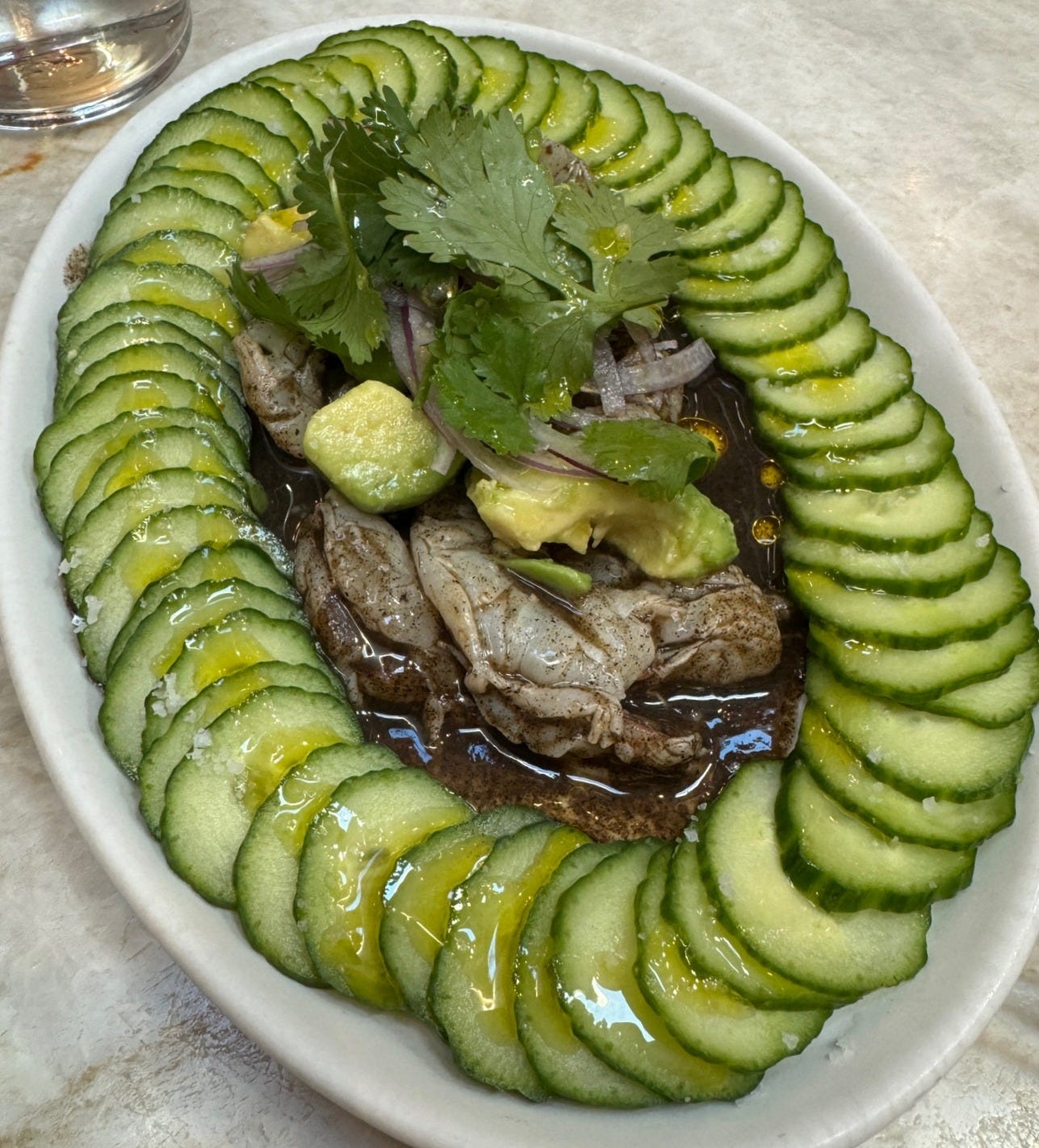
Mazatlecos take an enormous amount of pride in their shrimp and seafood, especially their aguachiles. People buy their seafood early in the morning. The shrimp boats come in and sell the freshly caught shrimp on the beach at 5:30 in the morning. Restaurant, puesto, and carreta owners go there, buy it, put it on ice, take it to their stands or restaurants, and serve it.
Normally, locals along the coast in Mexico eat their seafood in the morning and through about one or two o’clock in the afternoon, when it is freshest. Everything remaining after two is generally left for the tourists.
As you walk through el centro in Mazatlán, you see little puestos and carretas on every street corner selling oysters on the half shell, ceviches, aguachiles, cocteles de camarón, and more.
But if you are not into raw seafood or cannot eat it, don’t worry, just cook it. Pour the aguachile over the cooked shrimp and eat.

There are two other versions that I really like: aguachile rojo and aguachile negro.
They are both incredibly delicious, very different from each other, and also different from the traditional verde. Because it’s Summer, I wanted to give you these recipes for those days you just can’t be bothered to turn the stove on.
Aguachile rojo can be made with chiltepín, chile de árbol, guajillo, chipotle, morita, or a combination of whatever you like. You just need some kind of red chile. You could even use a red-ripe jalapeño, serrano, or Fresno if you had access to them. I love chiltepín, and I considered using it, but chiltepines are not quite as deeply red as chiles de árbol, so I decided to use chile de árbol.
The aguachile negro is black. Part of that comes from charring your chiles really hard until they are black. The other part of that comes from the seasoning ingredients such as soy sauce or salsa Maggi and Worcestershire sauce. I like Worcestershire sauce, but I am generally not a fan of that flavor in my Mexican food. It has such a distinctive flavor. When I taste it, it pulls me out of Mexican food, and I start thinking about barbecue or meatloaf or something else.
But that’s me.
I love aguachiles so much. I hope you do too, and I hope you try them, especially this summer.
If you are landlocked, one of these three versions, green, red, or black, will make you feel like you are seaside, poolside, beachside, or Mexico-side. You will be so happy while you are eating it. And anything troubling you will disappear with every succulent, sweet, and spicy shrimp you put into your mouth.
Here are the recipes again:


If you’ve read this far and you’re getting hungry, you probably want the recipe.
The full recipe, and monthly cooking classes are all on the paid side of Sazón.
There are over 190 recipes in the archive with new ones added every week.
A paid subscription is $50 for the year, which works out to about $0.26 a recipe.

If this kind of cooking makes you happy, you know what to do.

Rick Martínez
James Beard Award winner, Mexican cookbook author, and creator of Sazón, my weekly Mexican cooking newsletter with Mexican recipes, cooking techniques, original dishes, and deep-dive guides from my life in Mexico.
Rick, assuming I want to go raw with the shrimp, and I am not in a place where I'm likely to find shrimp fresh off the boat, what am I looking for at the store as far as quality and safety?