

It's Soup Season!
Sopa de Elote Veracruzana con Chipotle

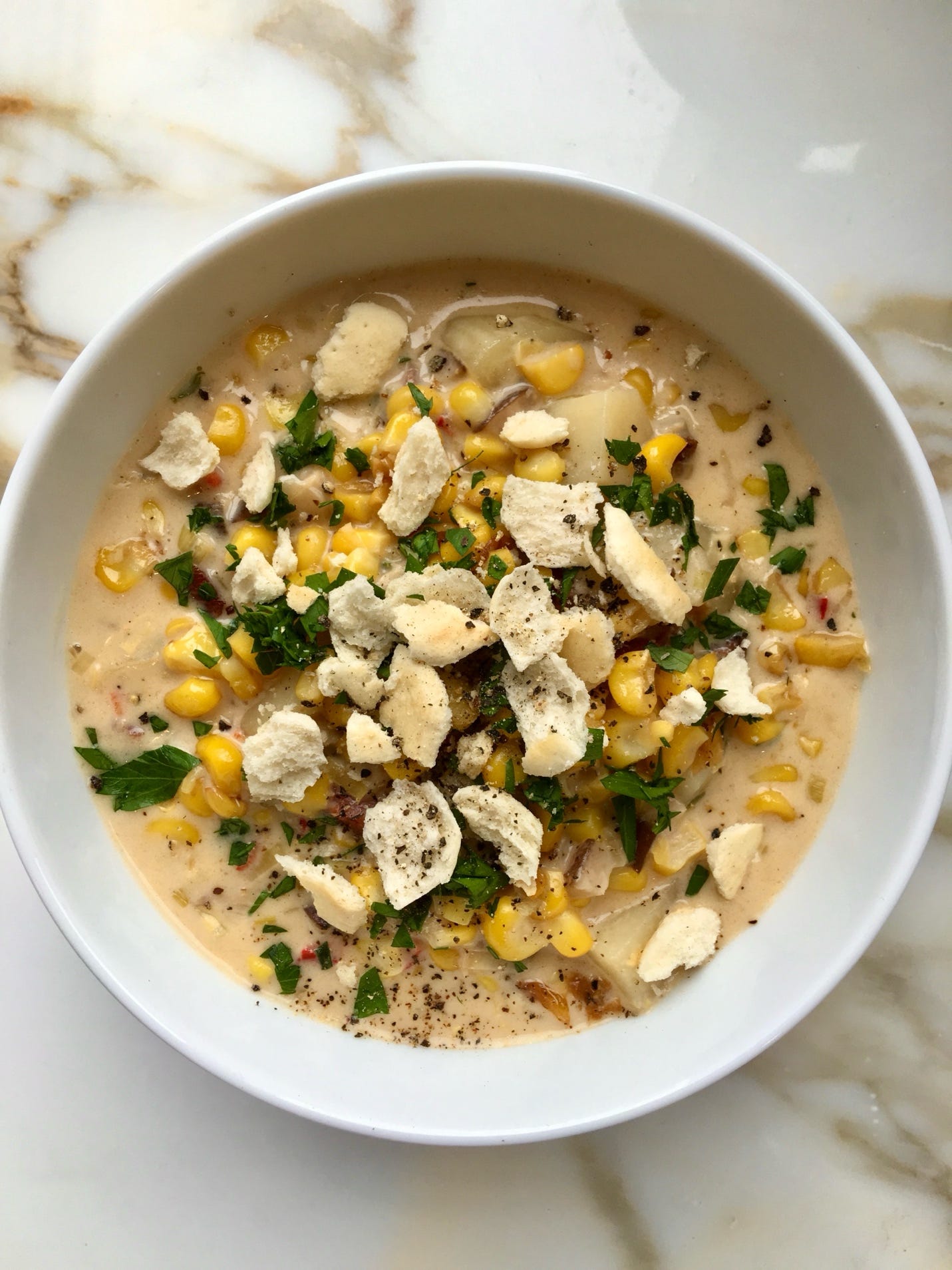
Corn chowder is one of my favorite soups. I love how sweet corn, onions or shallots, and cream come together to make one of the most comforting bowls of soup. September and October are still corn season in many places, and late-season ears often taste especially sweet. When the nights cool off, I reach for corn soups and chowders.
Like so many dishes in the Mexican culinary canon, there is no single right way to make it. Corn soup is no exception. Every region, every city, every pueblito, every family has their own version, each made with the cook’s own personal sazón. That is what makes Mexican cuisine so alive and inspiring.
In Mexico, people cook with what grows nearby, what is affordable, and what tastes good at home. Use any recipe here as a guide, not an absolute. Adjust to what you like, what you have, and make it fit your sazón.

Why there are many regional versions
Regional ingredients shape the soup. Coastal markets in Veracruz and along the Pacific add seafood or dried shrimp. Highland regions use herbs like epazote and hoja santa and often thicken with masa or tortillas. In the north, Mennonite and asadero cheeses are common, so dairy shows up more. Yucatán brings chaya and sour orange. Michoacán uses fruity-hot chiles like perón. Oaxaca leans on hoja santa and squash blossoms. Same dish, different pantries, different climates, different tastes.
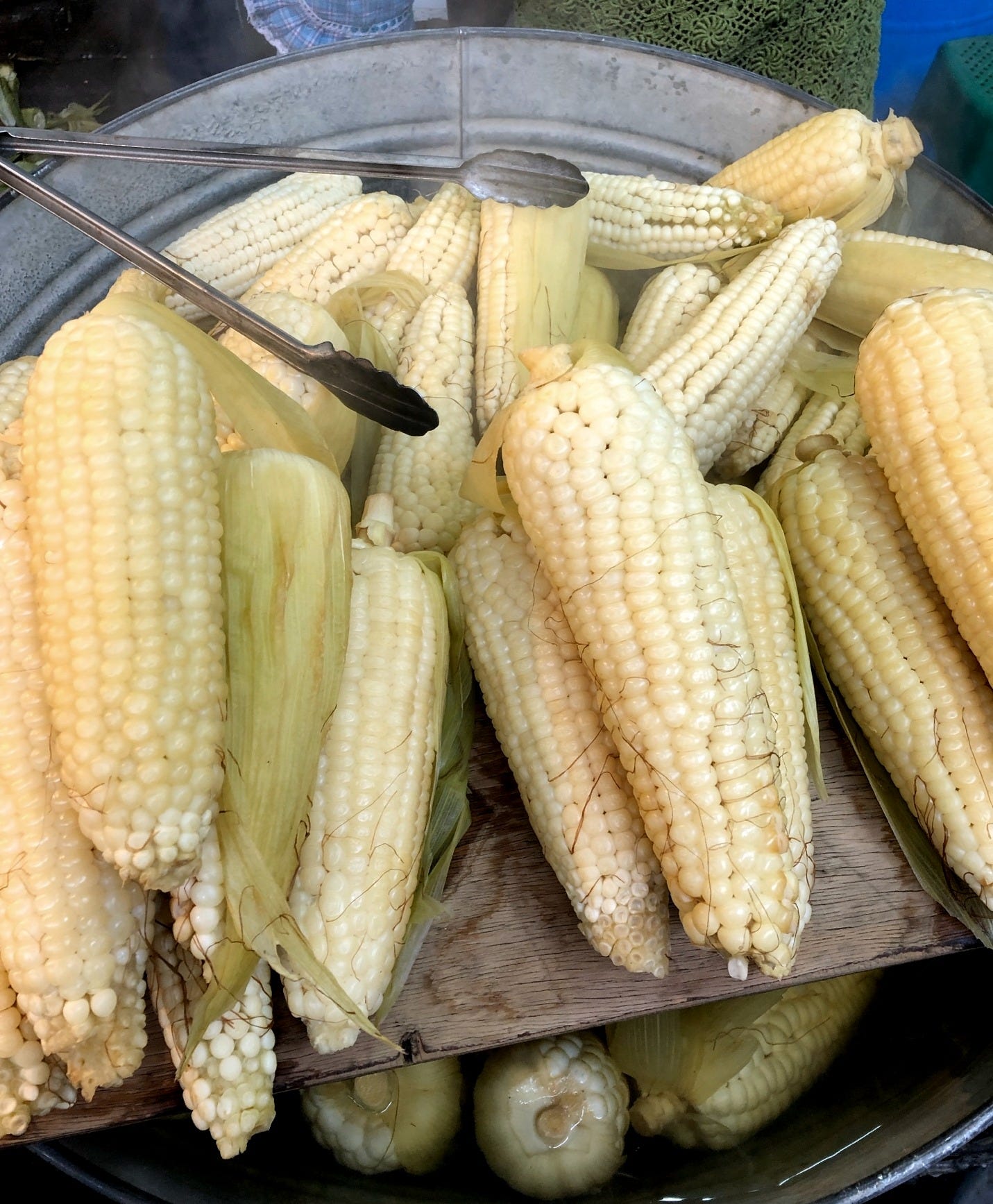
How Mexico does corn soup, by region
These are just some of the ways corn soups appear across Mexico. I’ve included a few details so you can try them yourself, and if there’s one you’d like to see as a full recipe, let me know in the comments and I’ll work on developing it.
Veracruz, caldillo rojo with chipotle: Tomato, onion, garlic, and a whole chipotle make a light red broth. Corn and epazote simmer until tender. Blend part of the pot for body, then finish with lime.
Veracruz, dried shrimp depth: Toast guajillos and blend with tomato for a thin red base. Simmer with rinsed dried shrimp to season the broth, add corn and epazote, blend a portion for a silky finish.
Totonacapan, hoja santa and chipotle: Tomato base lightly scented with a small piece of hoja santa and a bit of chipotle. Simmer corn gently. Blend part of the soup for a lightly creamy texture.
Central Highlands, epazote and masa: Onion, garlic, corn, serrano, and a sprig of epazote. Thicken with a spoon of masa harina or a torn tortilla.
Puebla, crema poblana with rajas: Roasted poblanos meet corn in a light stock. Blend part of the pot and finish with a little crema.
Oaxaca, hoja santa and costeño amarillo: Onion, garlic, corn, a small piece of hoja santa, and yellow chiles. Masa or tortilla adds body.
Michoacán, chile perón cream: Corn, onion, and garlic simmer with sliced perón chile, then get blended very smooth. Finish with crema and a little cotija.
Chiapas and Tabasco, chipilín greens: Sweet corn with tender chipilín leaves in a clear broth. Thicken lightly with masa or a quick blend. Brighten with lime.
Nayarit and Sinaloa, shrimp-broth style: Thin red tomato-chile broth with corn and epazote, seasoned by dried shrimp or seafood stock. Garnish with avocado and lime.
Norte, green chile and melty cheese: Corn with roasted green chile and small potato dice in a simple broth. Finish with a little crema and cubes of Mennonite or asadero.
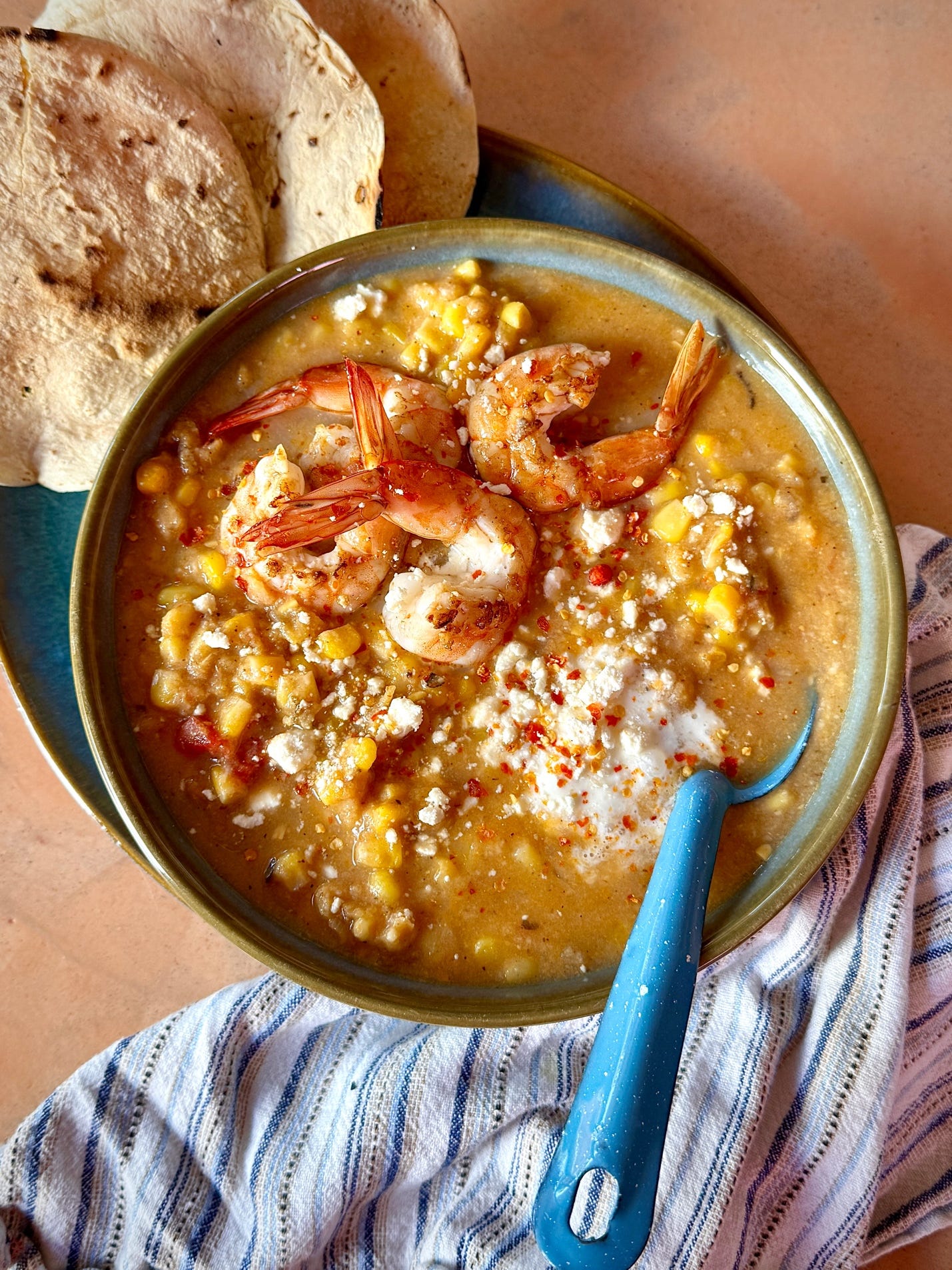
The bowl I am making this week
I am cooking the Totonacapan version from northern Veracruz. Tomato, onion, and garlic form the base. A small piece of hoja santa and a little chipotle perfume the pot. I blend half the corn with tostadas for gentle creaminess, then finish with epazote and lime. At home in Mazatlán I add shrimp at the end to poach for a couple of minutes. You can fold in crab or shredded rotisserie chicken, or keep it vegetarian. Queso fresco, crema, and a pinch of chile de árbol flakes on top make it feel like fall.
I also have a soft spot for hoja santa. My mom grew it in our yard in Texas when I was a kid, and I still get excited when I can use a fresh leaf. It brings a faint anise, almost root-beer aroma (it’s called root-beer plant in the southern US) that works beautifully with tomato, chipotle, and corn. If you cannot find it, a teaspoon of fresh tarragon or a small pinch of ground anise will give a similar, gentle perfume.
👉 The full step-by-step recipe is linked here for paid subscribers.
It follows our “Weeknight”, quick and easy framework, includes swaps for shrimp, chicken, crab, or vegetarian, and shows exactly how to blend with tostadas so the texture is perfect.
Try these, and tell me what you want next
Pick any regional variation above and make your own version this week. If you want a full recipe for one of them, tell me which one. I will happily write it and cook it so we can learn it together.

Keep Going
I made this soup because many of you asked for Mexican soups and stews.
Tell me what to cook next. Comment on this post, reply to this email, or DM me.
Pozole. Caldo tlalpeño. Sopa tarasca. Mole de olla. Something from your hometown. I’ll read it and make it!
🌶️ Subscribe to SAZÓN so you never miss a lesson or recipe.
Here is how it works:
Free subscribers get the first five Salsa Schools, Roja, Verde, Guacamole, Macha, Hot Sauce, plus access to the 100 recipes already in the index and weekly posts.
Paid subscribers get all new weekly recipes, every future Salsa School and guide beyond the first five, and deeper dives into Mexican cooking.
Both are great. Paid is better.
👉 Want perfect pairings for soup nights, plus a full salsa toolkit for tacos and beyond? Order Salsa Daddy.