

Vegan, Vegetarian January Reset
After the Holidays, I NEED More Vegetables

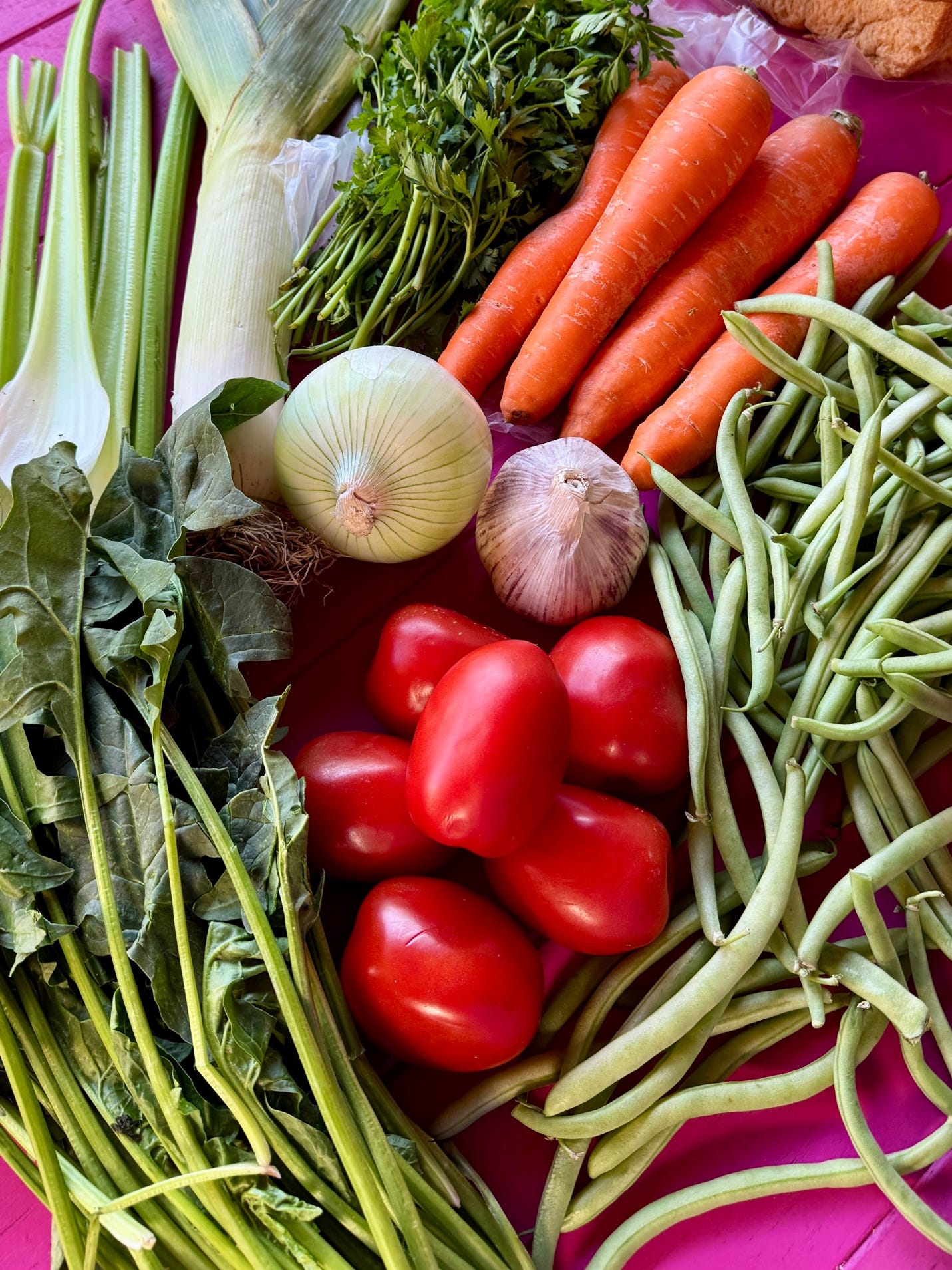
Happy New Year! I hope you had a great holiday. I went home to Austin to spend time with my family. It was honestly one of the best holidays I’ve had in a long time. In my family, food is how we show love. It’s how we take care of each other. So there was a lot of cooking, a lot of eating, and a lot of sitting around the table talking, laughing and spilling the chisme.
I ate like a king. Prime rib. Scalloped potatoes. Homemade breads. Cookies. Suadero. Tamales. Flour tortillas. It just kept going. Sometimes I was cooking for my stepmom and dad. Sometimes my aunts were cooking for all of us. It was amazing.
Then I came back to Mazatlán, stepped on the scale, and almost had a stroke. The price of a happy Christmas.
Part of the rise on the scale was because I am more active in Mazatlán. Choco (my dog) and I walk seven or eight miles a day. I walk to the mercado. I walk to run errands. I rarely use my car. For context, I filled up my gas tank once in all of 2025, and I only just had to get another fill-up a few days ago. In Austin, I’m in a car more. I’m standing in the kitchen cooking, but I’m not walking nearly as much. I did go to the gym, but it wasn’t enough to keep pace with how much I was eating.
So when I got back, I knew I needed a reset. Not to undo the holidays and not as a punishment. Just to recalibrate. For me, that means easing up on meat for a bit and leaning back into vegetables, herbs, grains, and beans. I still need protein. I still need energy. I just want it to come from food that makes me feel better after I eat it.
That’s easy for me to do because I genuinely love vegetarian food. I love meat too, but I really love fresh produce. That’s also why this reset feels natural to me. I live in Mazatlán because I love cooking with fresh produce. It’s a tropical climate. Things grow year-round. I have access to fresh-ripe tomatoes, papaya, mango, coconut, melon, bananas, plantains, pineapple. My normal breakfast is tropical fruit and coffee. When I go to the market and see beautiful vegetables, my instinct is to buy them and cook something traditional, just without meat, and let the veggies do the work.
The only vegetarian food I can’t stand is the kind that leaves you hungry an hour later. If I cook a meal, eat it, enjoy it, and then I’m rummaging around the kitchen again two hours later, that’s annoying. That’s not a real dinner to me. When I cook vegetarian or vegan food, I want the same things I expect from any Mexican meal. I want contrast. I want texture. I want heat and acidity to wake things up, and richness and umami so it actually fills you up. I want crunch somewhere, even if it’s just a tostada on the side or a handful of shredded cabbage. Most of all, I want to feel satisfied when I’m done eating.
That’s why I start by thinking about what the meat is doing in the original version. Is it there for texture, like something shredded and soft, or crisp on the outside and tender inside. Is it providing fat, depth, or umami. Is it simply something textured that the salsa can cling to. Once I understand its role, I can reimagine the dish using plant based ingredients and without losing what made it work in the first place.
Sometimes that means searing vegetables hard, letting them brown deeply so they develop real savory flavor. Sometimes it means leaning on onions cooked until they’re sweet, or using nuts, seeds, or legumes to add body and richness. Mushrooms show up often because when you brown them properly, they bring a depth that mimics meatiness. What I don’t reach for is fake meat. I don’t like it, and I don’t like heavily processed food in general. Years ago at Food Network, I had to make a vegan mac and cheese using vegan cheese. The pot was boiling, I added the shredded vegan cheese, and it just floated on top. It didn’t melt. I was horrified. I remember thinking, “if you’re trying to eat more veggies, why replace real food with something processed and full of chemicals?”
So for this week, I’m sharing two vegan recipes that hit all my check marks. They’re bold, easy, and SUPER flexible. They’re made for January when fresh produce is sad. They’re not about deprivation. They’re about cooking food you actually want to eat and will make you feel satisfied after.
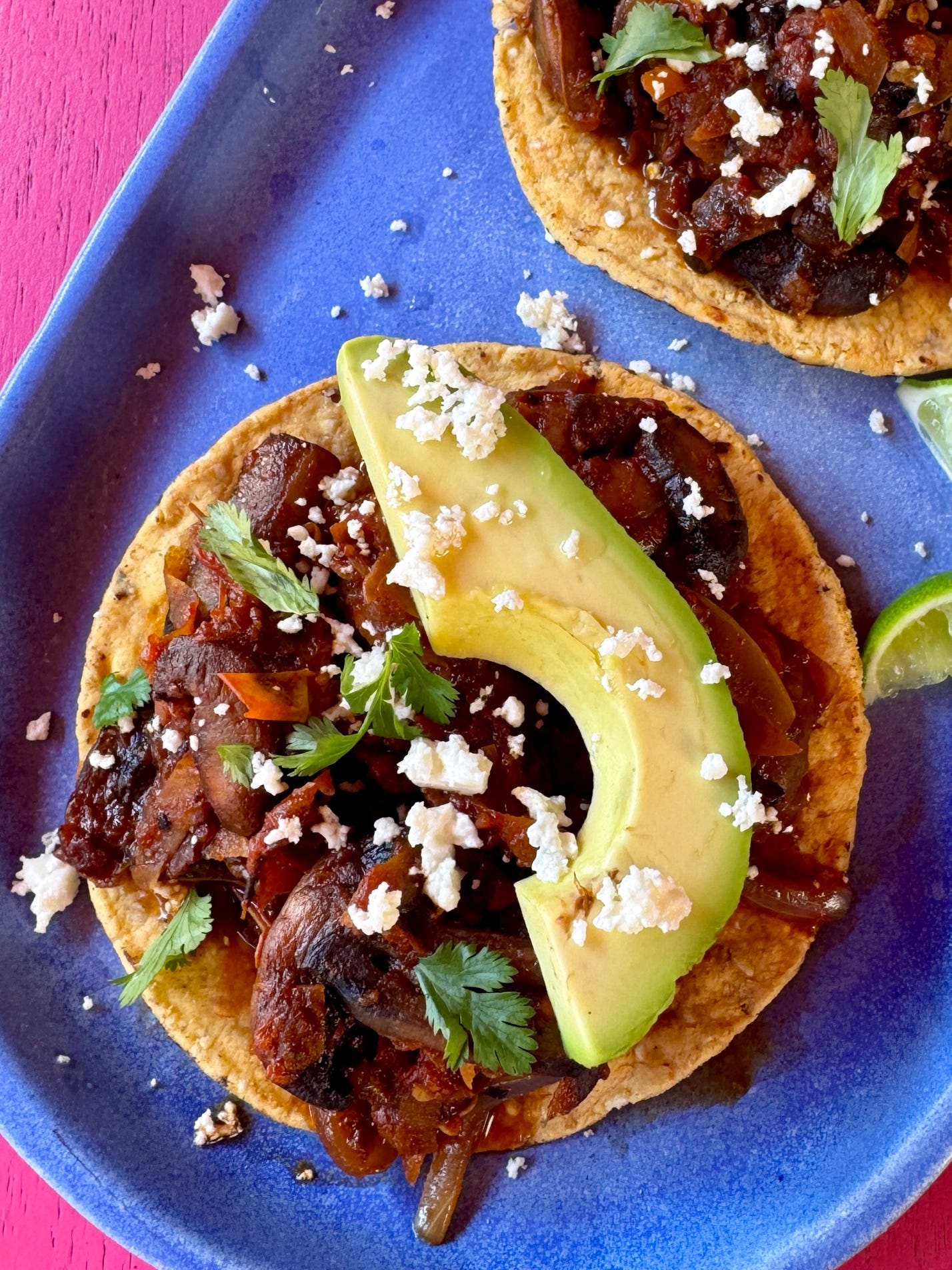
Mushroom Tinga
I love tinga de pollo. I’ve written a ton of recipes for it. The classic version where you simmer chicken with tomatoes and chiles until everything is soft enough to blend, and the chicken is tender and shreddable. I’ve done weeknight versions with rotisserie chicken too. It’s one of those dishes that is easy and super satisfying.
I had never done a vegetarian version, and once I started thinking about it, it felt obvious. In chicken tinga, the meat is doing two big jobs. It gives you that shredded texture that holds onto that chipotle salsa and it gives you savory depth that fall off the bone meat brings.
So I replaced the chicken with mushrooms and carrots. Mushrooms because when you sear them hard and let them brown, they punch you with umami. Carrots because when they’re shredded they mimic the mouthfeel of the chicken. They also bring a little sweetness that you don’t get from mushrooms. The mushroom flavor is deep while the carrots and onions bring just enough sweetness to balance the smoke and savory.
To make it taste like a real tinga, you need chipotles. I’m using canned chipotles in adobo because that adobo sauce is a chef’s miracle. It makes food taste like it’s been simmering for a long time even when it hasn’t. You get smoke, heat, and that deep cooked flavor in one product. That’s why it’s always in my pantry.
This recipe is also very versatile, it can be a taco filling or a tostada topper. It’s great with rice and beans. I even put it inside an omelet. I scrambled eggs, poured them into the pan, spooned the tinga into the middle, folded it over, and it was delicious. The point is, it’s not a one-trick recipe. It can become dinner in a lot of different forms.
And it’s built to be customized. If you don’t like mushrooms, use tofu or tempeh. Use chickpeas. Use canned beans. Use corn. You can even use a sturdier winter squash, something that will brown instead of turning to mush like summer squash will. If you want a longer simmered flavor without canned chipotles, you can use dried moritas, which are smoked jalapeños, and then add an ancho or guajillo for more depth. If you have none of that, use chili powder plus cayenne or red pepper flakes. The goal is getting a delicious dinner on the table fast with what you already have.
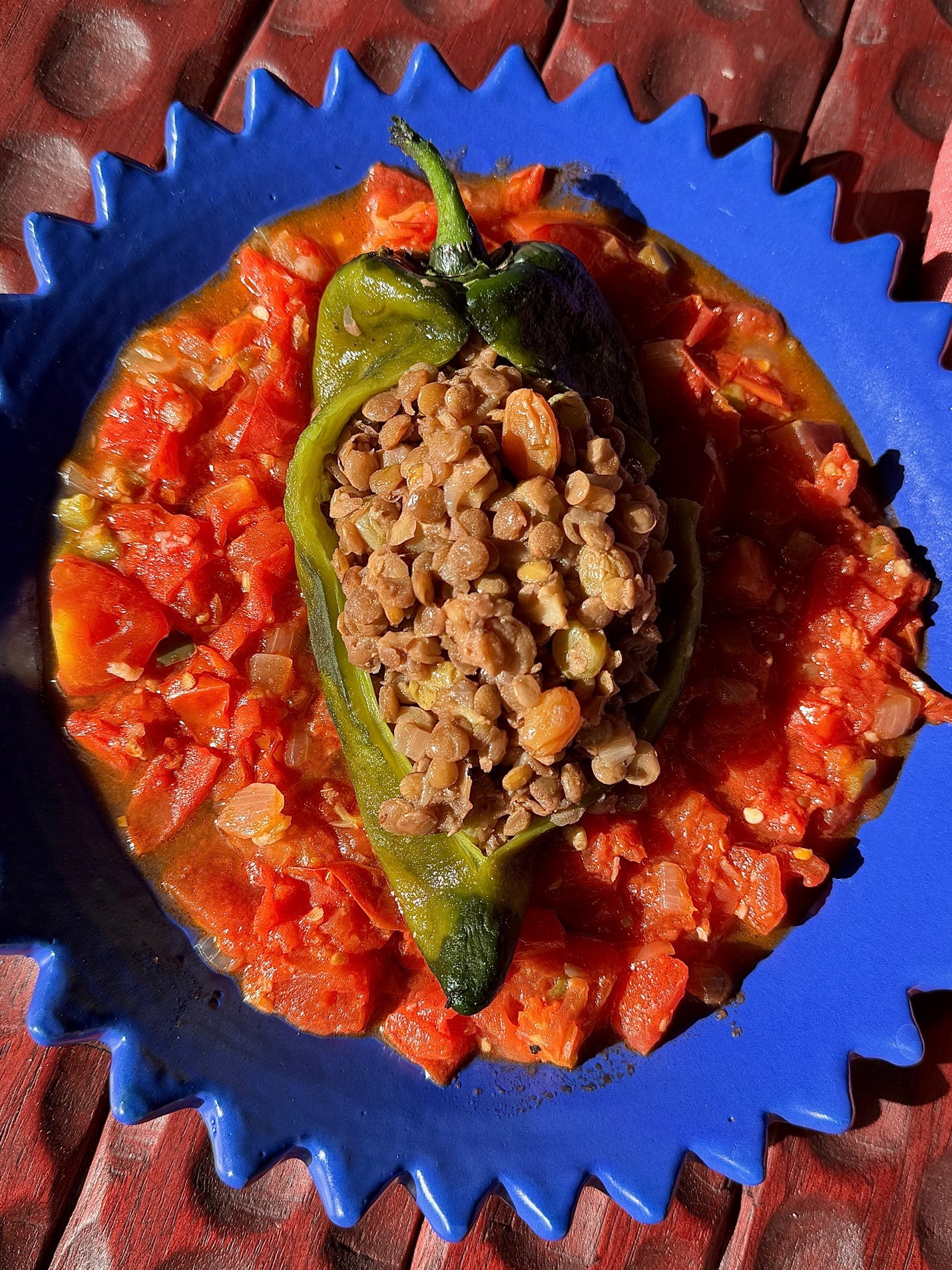
Chiles Rellenos, and how to make them weeknight-friendly
I love chiles rellenos. The problem is that on a weeknight, roasting and peeling chiles can feel like a lot if you’ve had a long day. It’s doable, but it’s a hustle. You can make it under an hour if you move, but I’m not going to pretend everyone wants to do that on a random Tuesday.
So I’m giving you the full version, but I’m also giving you some flexible options.
The filling is lentils cooked with aromatics, toasted nuts and dried fruit. It’s satisfying because it has texture and richness. Lentils give you protein and substance. Nuts give you fat and texture. Dried fruit gives you a pop of sweetness that keeps the filling from tasting flat. Then there’s a simple cooked tomato salsa that gives you a spicy little kick. I know it’s winter and tomatoes are pretty terrible, so this is why I’m using canned fire-roasted tomatoes. You open the can and you’re already halfway done. Plus, they actually have good tomato flavor.
If you want to make this weeknight super easy, you can skip the whole stuffed chile step and turn it into a stew. I’ve done this before. Basically, you’re just simmering all the listed ingredients together in one pot. Chop the onion, garlic, and chiles (use 1 or 2, not 4). Sauté them. Add the lentils, water, and the canned tomatoes. Then simmer until the lentils are tender. That’s it. You get a smoky, hearty winter stew that you can eat with tortilla chips, tostadas, bread, or over rice.
If you still want the stuffed pepper feeling but don’t want to roast poblanos, use bell peppers. No roasting. No peeling. Just cut the top off, fill them with the lentil mixture, put the tops back on, and bake. You can crank the oven to 425°F so they get a little color. It’s not traditional chile relleno, but technically, it is a stuffed chile and, more importantly, it’s easy.
If you want to cut even more time, use canned lentils or canned beans or canned chickpeas. Cook your aromatics until soft, add the tomatoes and your cooked legumes, bring it to a simmer, and you’re done. You can build a lot of dinners out of the same set of ingredients.
That’s the whole point of this week. If you want to make a shift from meat to veggies right after the holidays, I am going to make it as easy as possible. These recipes are designed so you don’t have to go to the store and you don’t have to buy new ingredients.
I’m also showing you how to make salsa in winter when grocery store tomatoes are gross. Canned tomatoes are your friend here. I use diced because it’s easy, but whole canned tomatoes work too. I avoid tomato sauce unless it’s the only option, because that flavor pulls my brain toward Italian food. That’s just how I taste it. But use what you have.
For heat, fresh serranos and jalapeños are usually good year-round. If you don’t have fresh chiles, use red pepper flakes, cayenne, chili powder, or even pickled jalapeños. If you use pickled, drain them first and go easy on the vinegar. Canned tomatoes already have acidity, and too much vinegar can throw the balance off. Taste as you go.
Just remember that vegetarian and vegan Mexican cooking works when you treat veggies like the meat. Play with texture, heat, acidity, bitterness, caramelization, umami, and use enough fat to make it satisfying. If you hit those marks, you won’t miss meat and you won’t be hungry an hour later.
Recipe: Mushroom Tinga (Paid Subscribers)
Recipe: Chiles Rellenos with Lentil-Nut Filling (Paid Subscribers)

If this story brought up memories, made you hungry, or taught you something new, consider subscribing to Sazón.
Free subscribers get weekly essays and guides.
Paid subscribers get full recipes, deeper notes, and cooking lessons you won’t find anywhere else.
Both are great. Paid is better.

Rick Martínez
James Beard Award winner, Mexican cookbook author, and creator of Sazón, my weekly Mexican cooking newsletter with Mexican recipes, cooking techniques, original dishes, and deep-dive guides from my life in Mexico.
You are so welcome! I am so happy you liked it and it is useful for you!
Boy, do I love cooking tips like this! You are really teaching us principles and techniques which is so much more useful, because then I can apply them to whatever ingredients I have on hand, just like you said.
Thank you for the expertise!