


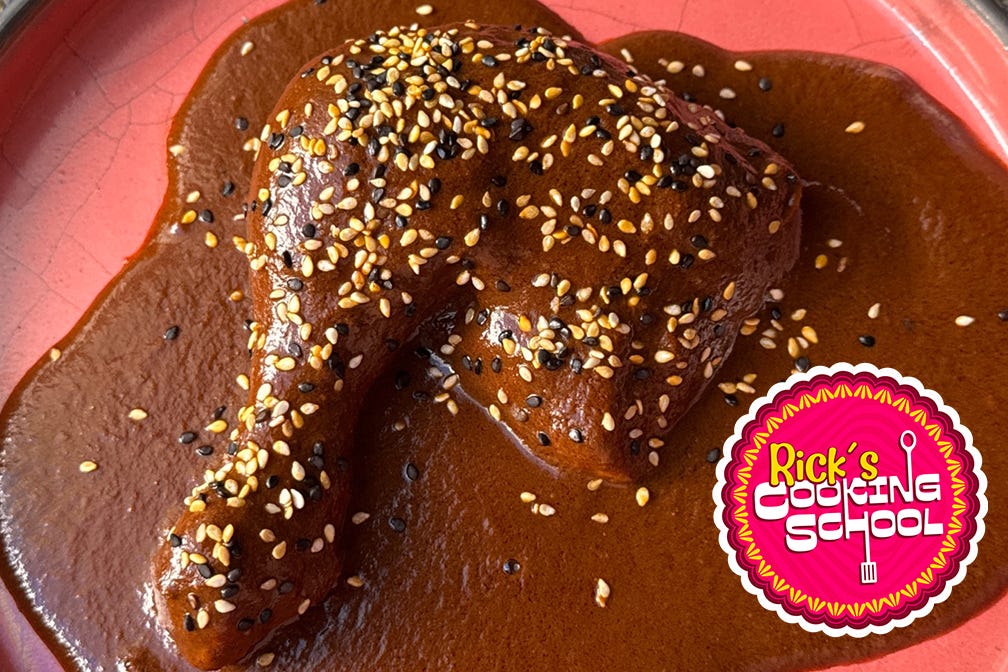
Mole Poblano comes from Puebla during the colonial period, where Indigenous cooking traditions met Spanish and global ingredients. Salsas (sauces) like molli (a Nahuatl word meaning “sauce”) already existed long before, made with chiles and seeds, and over time things like nuts, spices, bread, and sesame got added. By 1780, it shows up in written recipes as clemole poblano—an earlier form of mole that is more like a guiso, with chiles, meat, herbs, and spices in a looser, brothier sauce, not yet the thick, layered version we know today.
There isn’t one “TRUE” recipe, but most moles poblanos use similar ingredients and methods: dried chiles for depth, nuts and seeds for body, a touch of sweetness for balance, spices for complexity, and a thickener like bread or tortilla. Chocolate is usually included, but it stays in the background, adding depth rather than dominating. What defines it most is the process, each ingredient toasted or fried on its own, then blended and cooked again so the sauce comes out smooth, balanced, and not bitter.
Today, ingredients change based on availability or preference, techniques get streamlined or expanded, and some cooks lean into tradition while others adapt it. What stays consistent is the goal: everything working together so no single flavor stands out and the sauce reads as one delicious celebration dish.
